Main finding
Rent control increased stability for covered tenants, while affected landlords converted or redeveloped buildings and reduced the regulated rental supply.
Covered tenants were 10–20% more likely to remain; treated rental supply fell 15%
Diamond, McQuade & Qian
Main finding
Covered tenants were 10–20% more likely to remain; treated rental supply fell 15%
Most important limitation
The often-cited 5.1% citywide rent increase is a structural-model estimate, not the direct reduced-form rent coefficient, and the policy is specific to San Francisco.
From the publication
The paper separately traces covered tenants staying longer and renters leaving treated buildings.
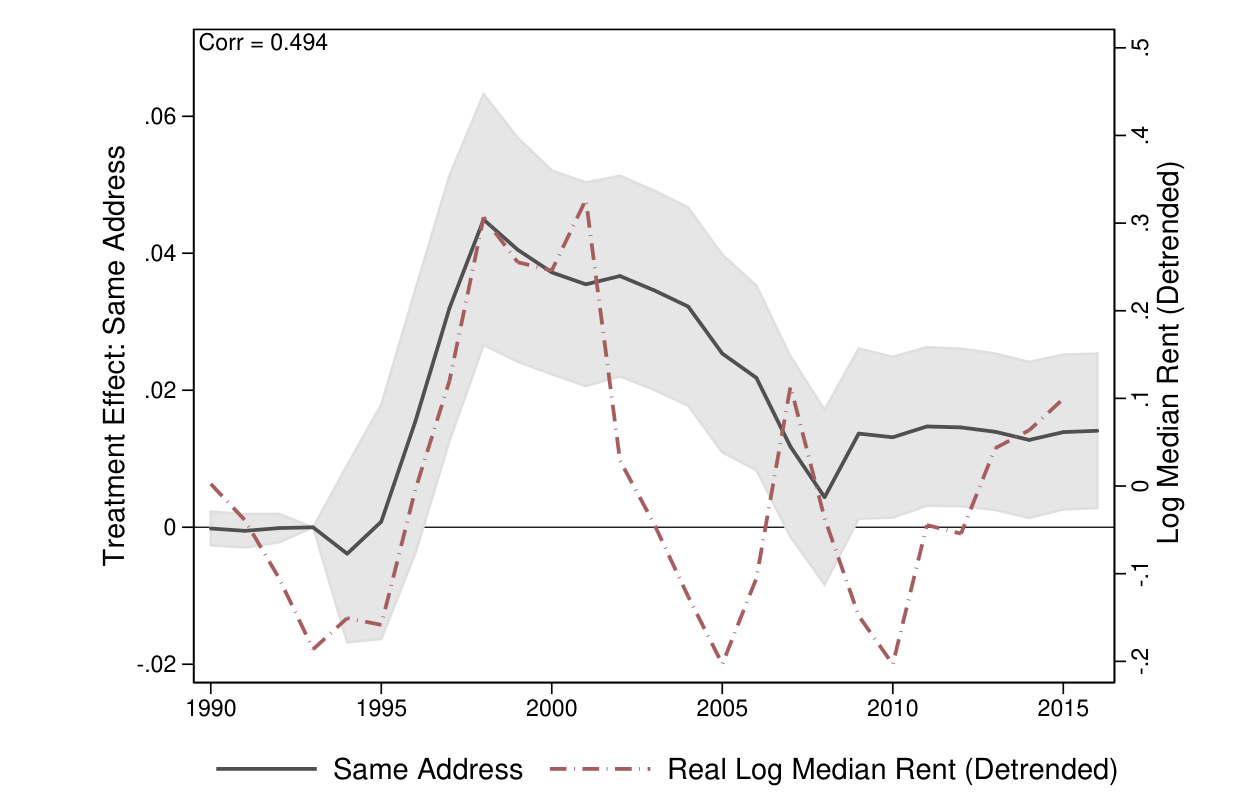 Figure 1a · Tenant stability
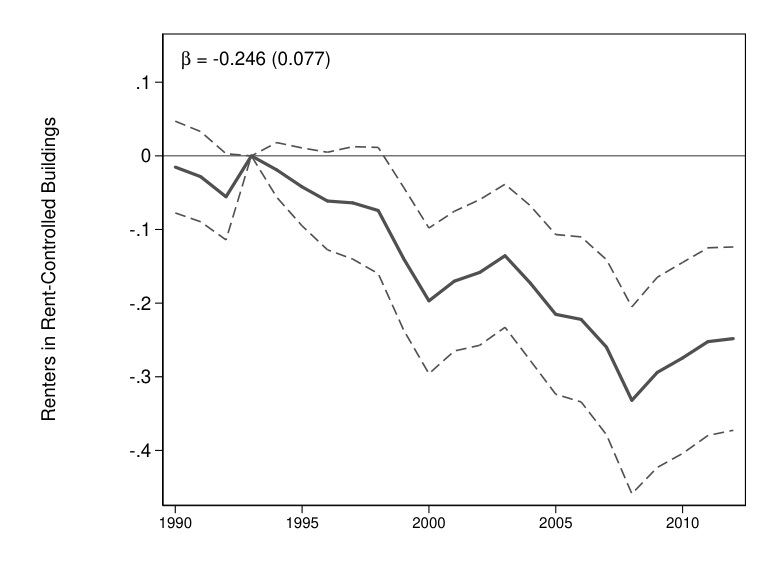 Figure 6a · Rental supply response
How this study is used
Reference
Diamond, McQuade & Qian (2019). “The Effects of Rent Control Expansion on Tenants, Landlords, and Inequality.”