Citywide housing costs
Evidence guide
Housing research is not one paper or one model. The most reliable conclusions recur across places, datasets, and research designs. Each claim below keeps the takeaway, limitations, studies, and relevant reforms together.
Broad consensus; exact magnitude varies.
Multiple credible studies converge.
Results depend materially on context.
Promising but still limited evidence.
Nine conclusions
Open any claim for the concise answer, the honest limitation, related policy reforms, source studies, and available research figures.
When more households want in than there are homes available, the highest bidders win. Everyone else pays more, accepts less, moves farther away, doubles up, or leaves.
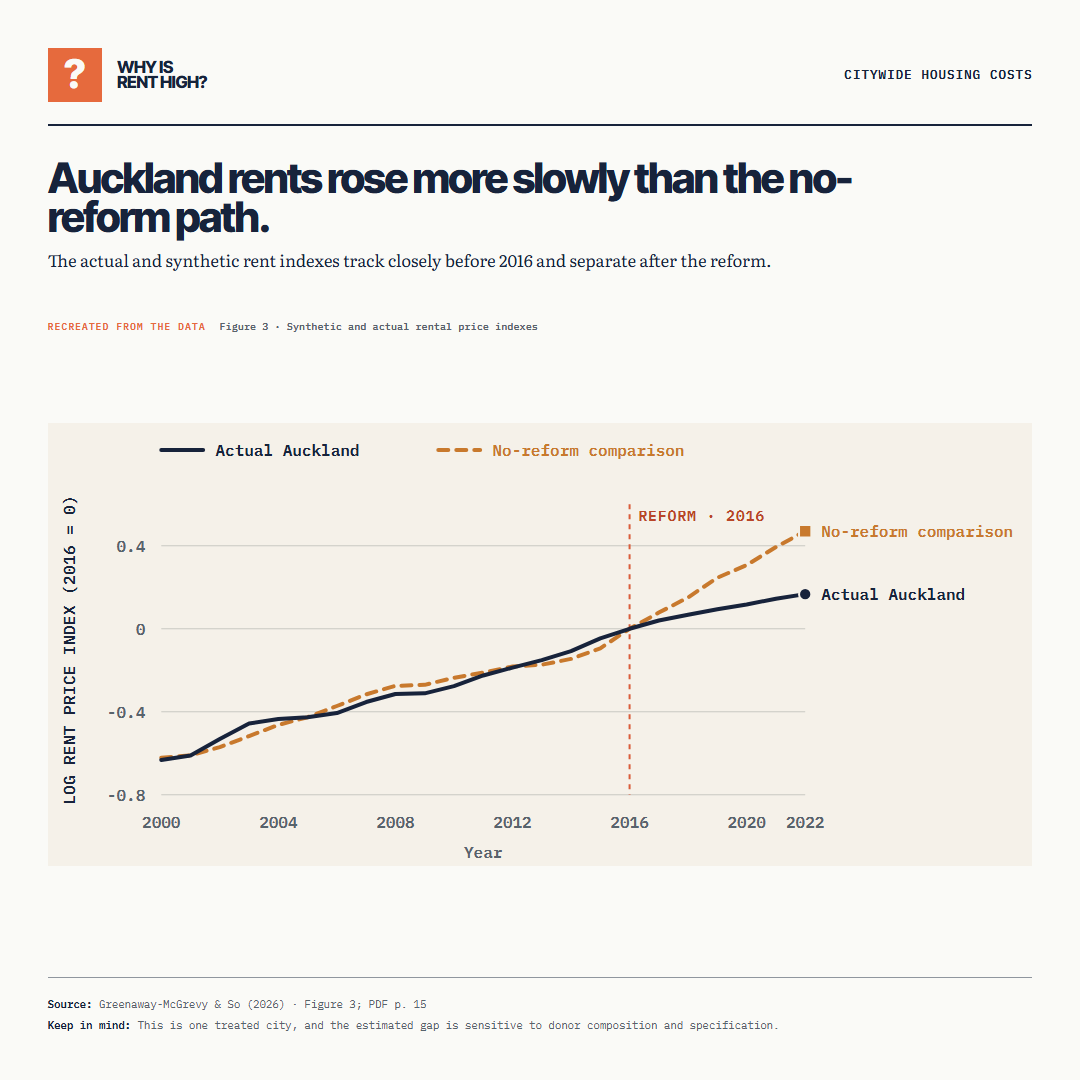
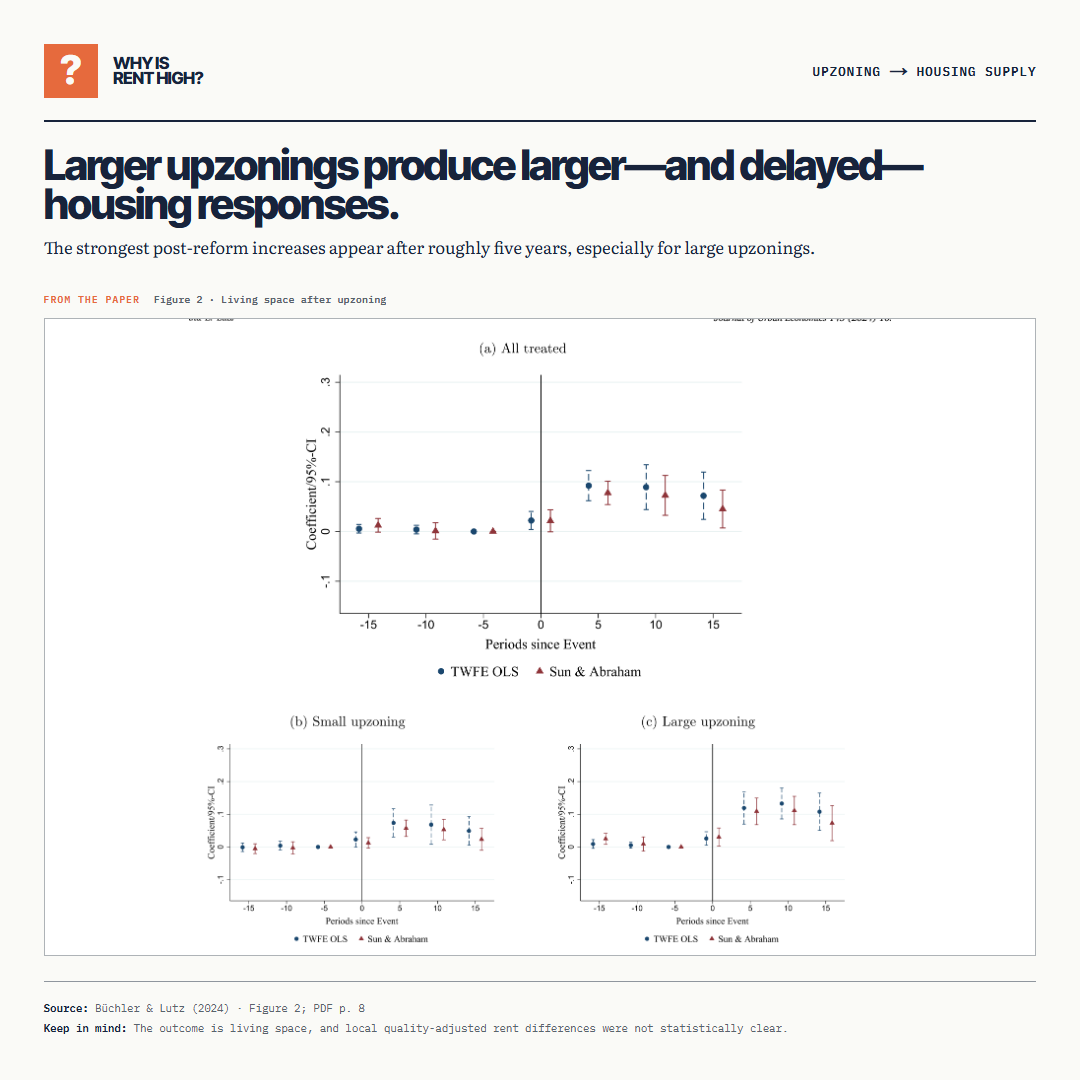
Legalize real projects across enough land and builders respond. Auckland did this at city scale and saw a large permitting boom; narrower reforms have usually delivered less.
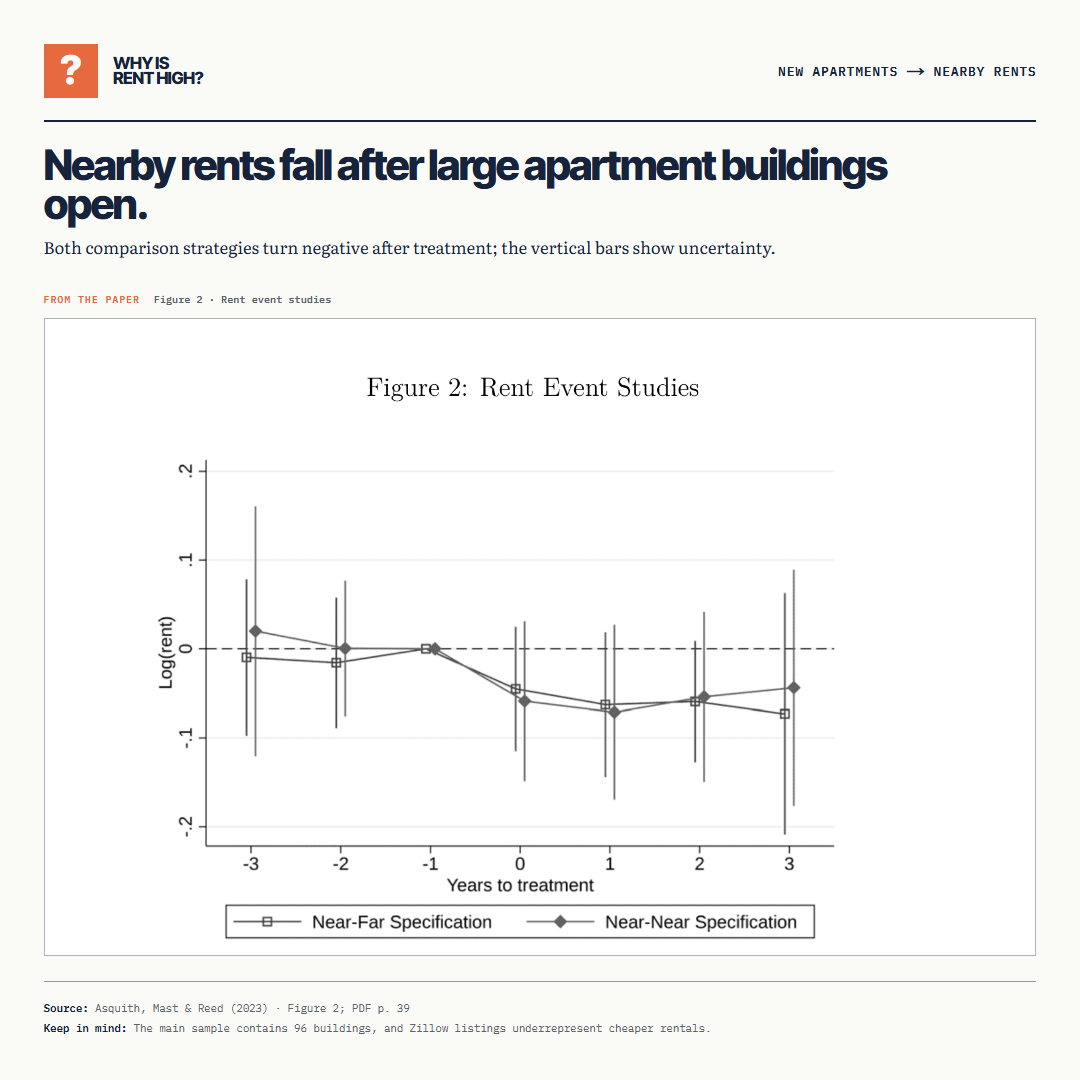
Across citywide reforms and individual projects, more housing means lower rents than continued scarcity. Sometimes rents fall. In fast-growing places, they may simply rise less.
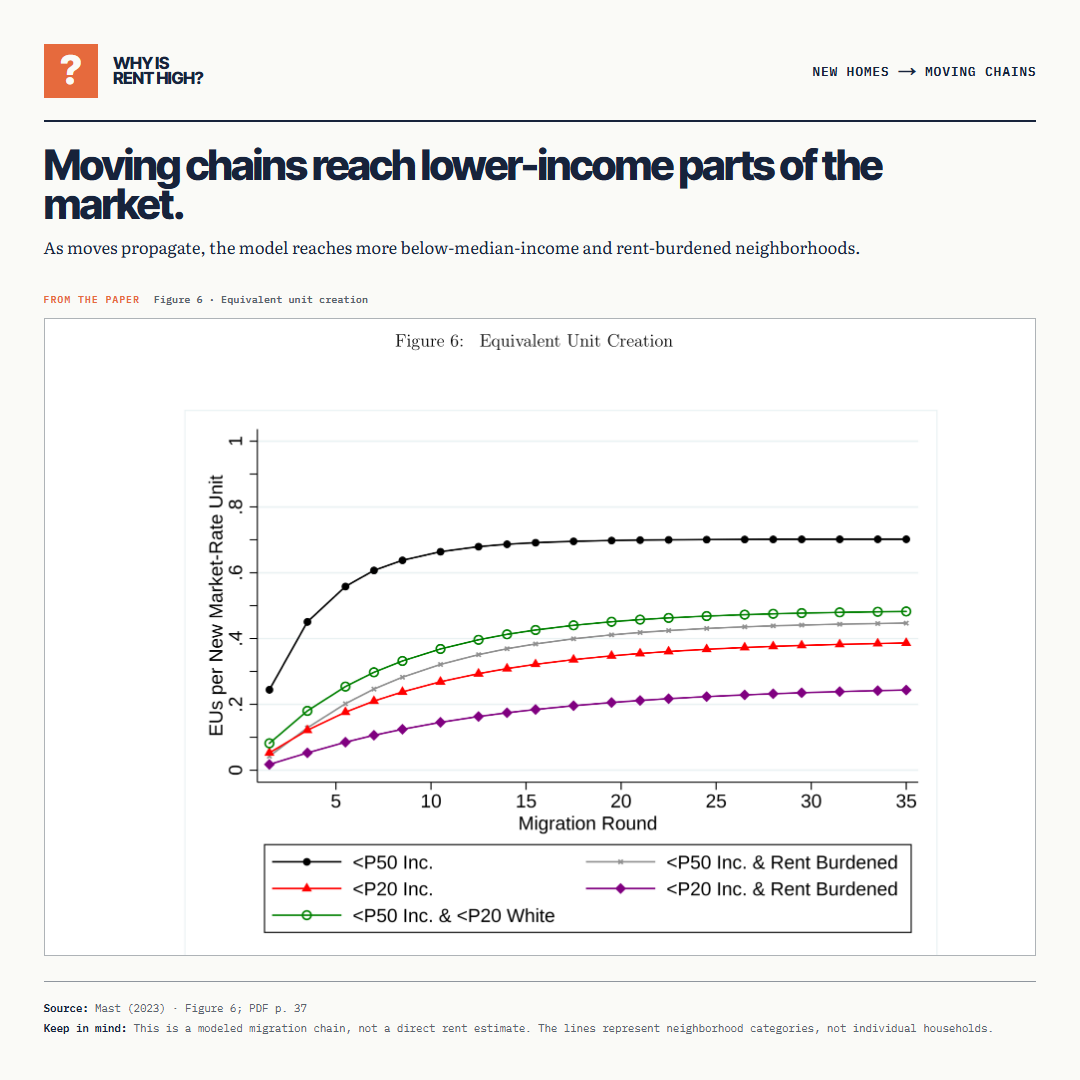
The first resident leaves another home behind. The next resident often does too. Those moving chains carry vacancies into older homes, cheaper homes, and more neighborhoods.
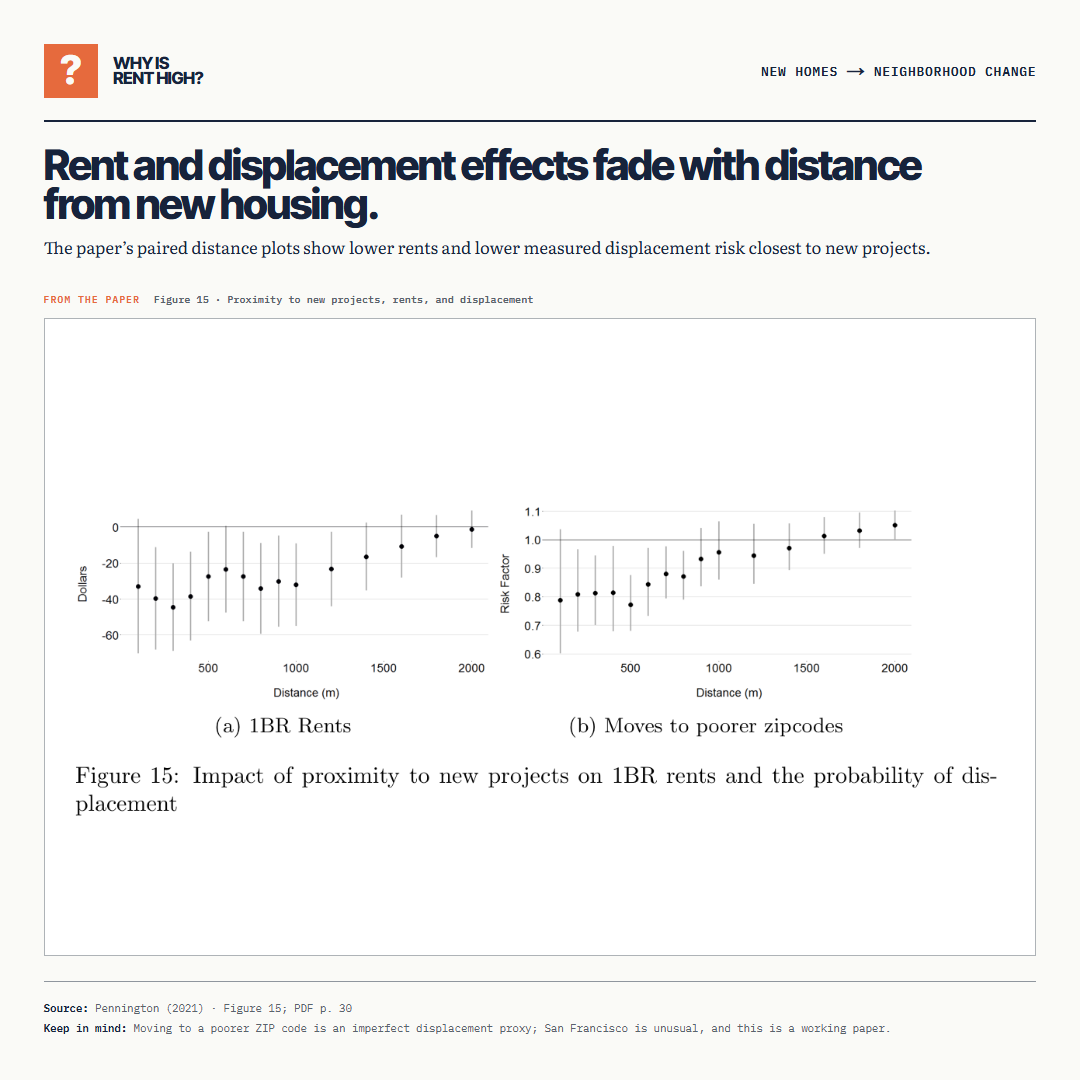
When newcomers cannot rent new homes, they bid for existing ones. Project-level studies generally find that nearby construction reduces rent and displacement pressure rather than increasing it.
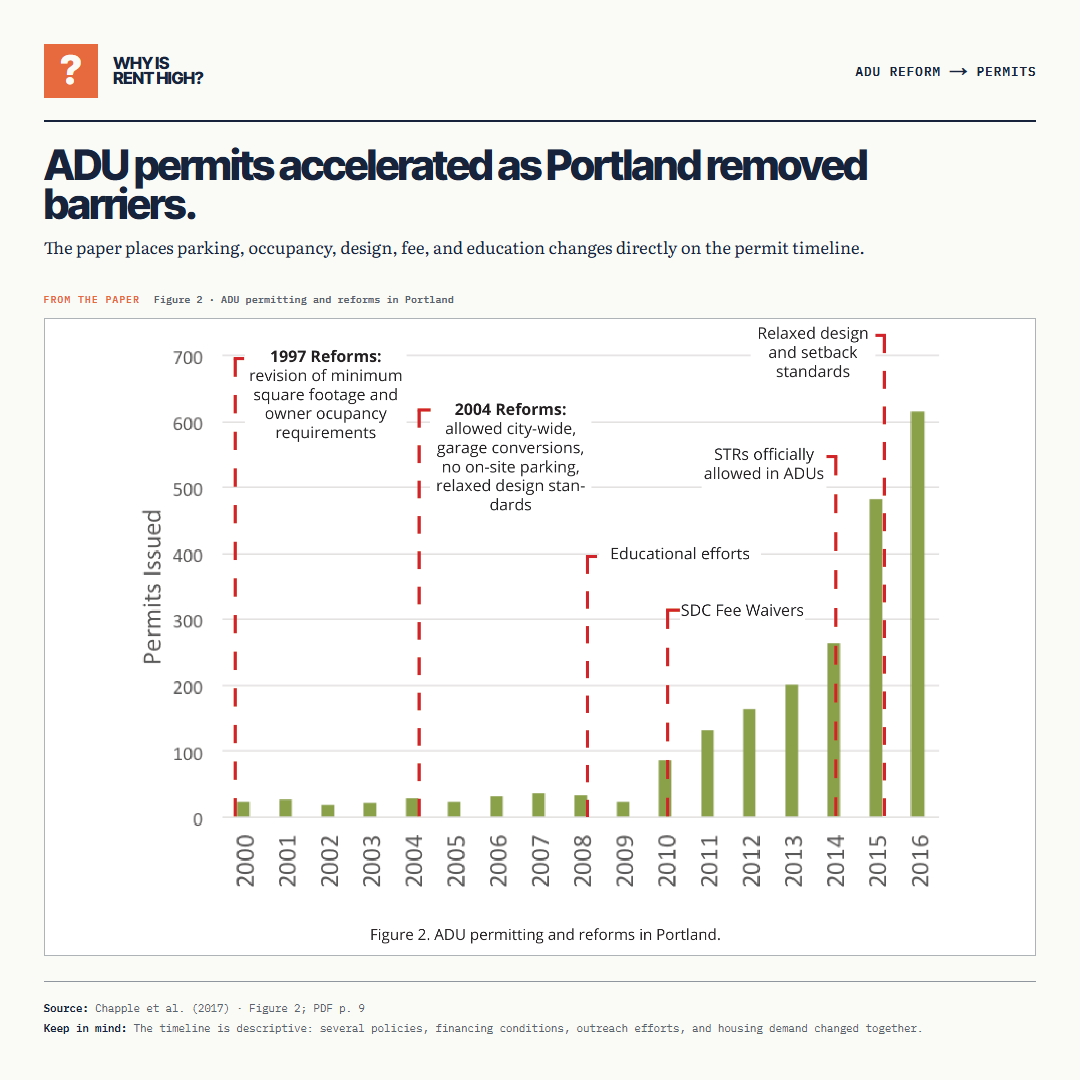
A reform can promise density and still bury it under tiny maps, parking ratios, setbacks, fees, hearings, and delay. Good reform makes ordinary projects legal, feasible, and predictable.
California's SB 35 gave qualifying projects a faster, more certain path than years of discretionary review. Affordable-housing builders became some of its most visible users.
A parking space consumes land, concrete, and money. Mandates hide that bill inside every home—even when a resident would rather have lower rent than a place for a car.
San Francisco's 1994 expansion made covered tenants more likely to stay, but it also led affected landlords to convert or redevelop regulated rentals. Good policy must account for both incumbent security and housing availability.
Visual evidence
These charts span rents, construction, moving chains, displacement, and reform. Each opens to a shareable version with the source and caveat attached.
Citywide housing costs
New apartments → nearby rents
Upzoning → housing supply
New homes → neighborhood change
Featured studies
These studies have page-referenced evidence records. Filter them here, or use the Library for the complete 113-resource reading directory.
Loading study filters…
Search the complete libraryOur standard
We distinguish association from causation, permits from completed homes, land values from rents, and nominal change from change relative to a counterfactual. Results that find little or no effect stay visible. Working papers are labeled. Figures disclose whether they reproduce data or only visualize an estimate reported by the authors.