Main finding
ADU production depended on a bundle of usable zoning, flexible occupancy and parking rules, manageable fees, financing, and technical help.
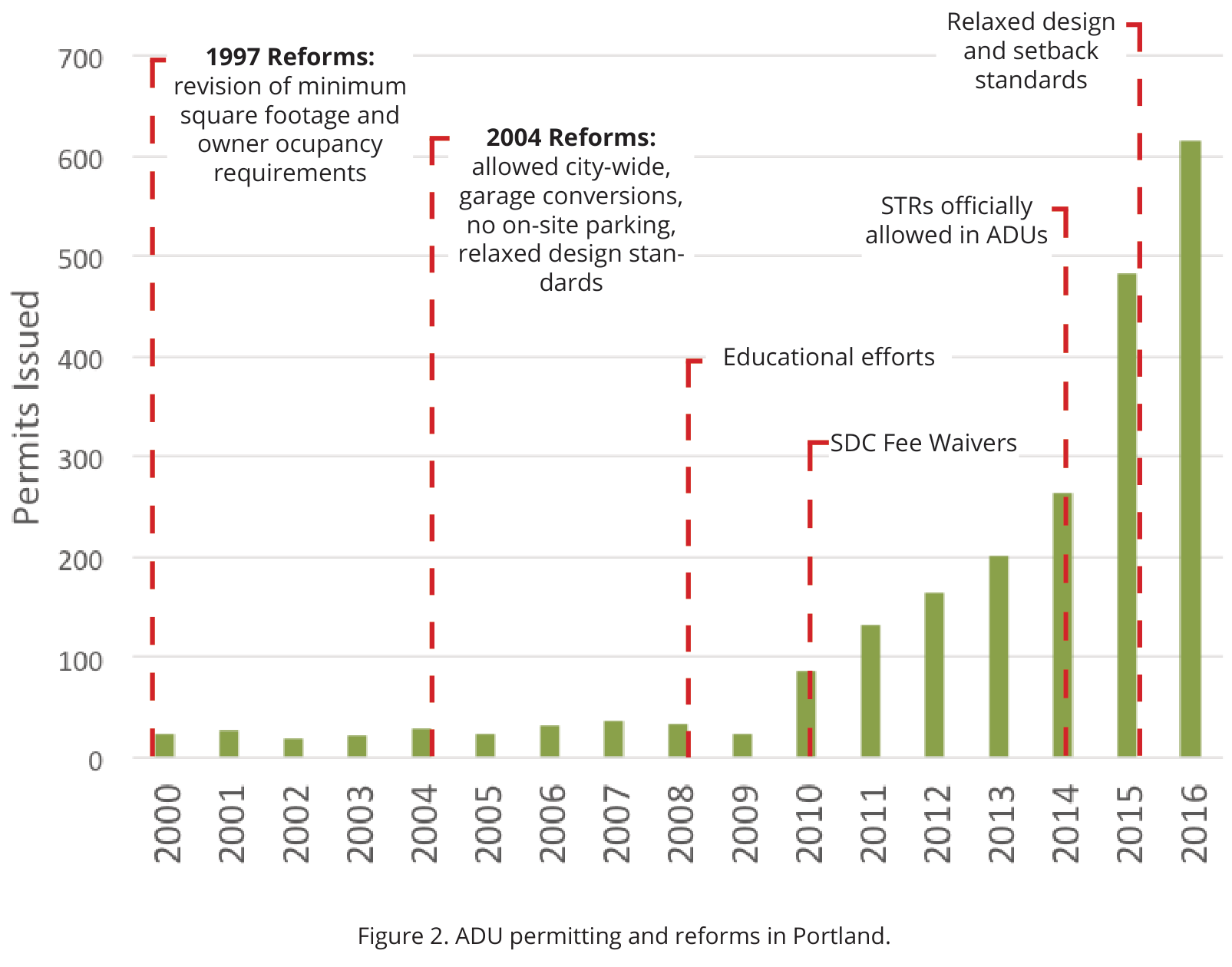
Portland issued nearly 2,000 ADU permits after 2010
Chapple, Wegmann, Mashhood & Coleman
Main finding
Portland issued nearly 2,000 ADU permits after 2010
Most important limitation
The study is descriptive: policy, demand, and homeowner selection changed together, so the permit count is not a causal estimate.
From the publication
The paper places parking, occupancy, design, fee, and education changes directly on the permit timeline.
How this study is used
Reference
Chapple, Wegmann, Mashhood & Coleman (2017). “Jumpstarting the Market for Accessory Dwelling Units.”