Allow capacity
Replace low unit caps with flexible form, height, and floor-area rules.
Apartments
Stop reserving most well-located land for the most expensive kind of home. Let more people live near jobs, schools, shops, and opportunity.
Stop reserving most well-located land for only one detached home. Let apartments, condominiums, and homes above shops be ordinary neighbors.
How it works
Replace low unit caps with flexible form, height, and floor-area rules.
Avoid setbacks, parking rules, and discretionary hearings that erase the new capacity.
As viable projects are completed, households have more choices than under scarcity.
The implementation test
Legalizing an apartment does not require anyone to sell, demolish a home, or build one. It gives property owners another option when change eventually occurs.
StrongApplies across many residential and commercial areas.
Weak or symbolicConfined to a few parcels or hostile corridors.
StrongHeight, floor area, setbacks, and fees work together.
Weak or symbolicNominal capacity is erased by conflicting rules.
StrongCompliant homes receive administrative approval.
Weak or symbolicEvery proposal faces an unpredictable political hearing.
In practice
Auckland broadly expanded residential capacity across roughly three quarters of its residential land instead of concentrating change in a handful of sites.
Scale matters. A broad reform creates many feasible locations and reduces the chance that a small set of newly valuable parcels captures the entire benefit.
Why support it?
Legalize real projects across enough land and builders respond. Auckland did this at city scale and saw a large permitting boom; narrower reforms have usually delivered less.
Across citywide reforms and individual projects, more housing means lower rents than continued scarcity. Sometimes rents fall. In fast-growing places, they may simply rise less.
A reform can promise density and still bury it under tiny maps, parking ratios, setbacks, fees, hearings, and delay. Good reform makes ordinary projects legal, feasible, and predictable.
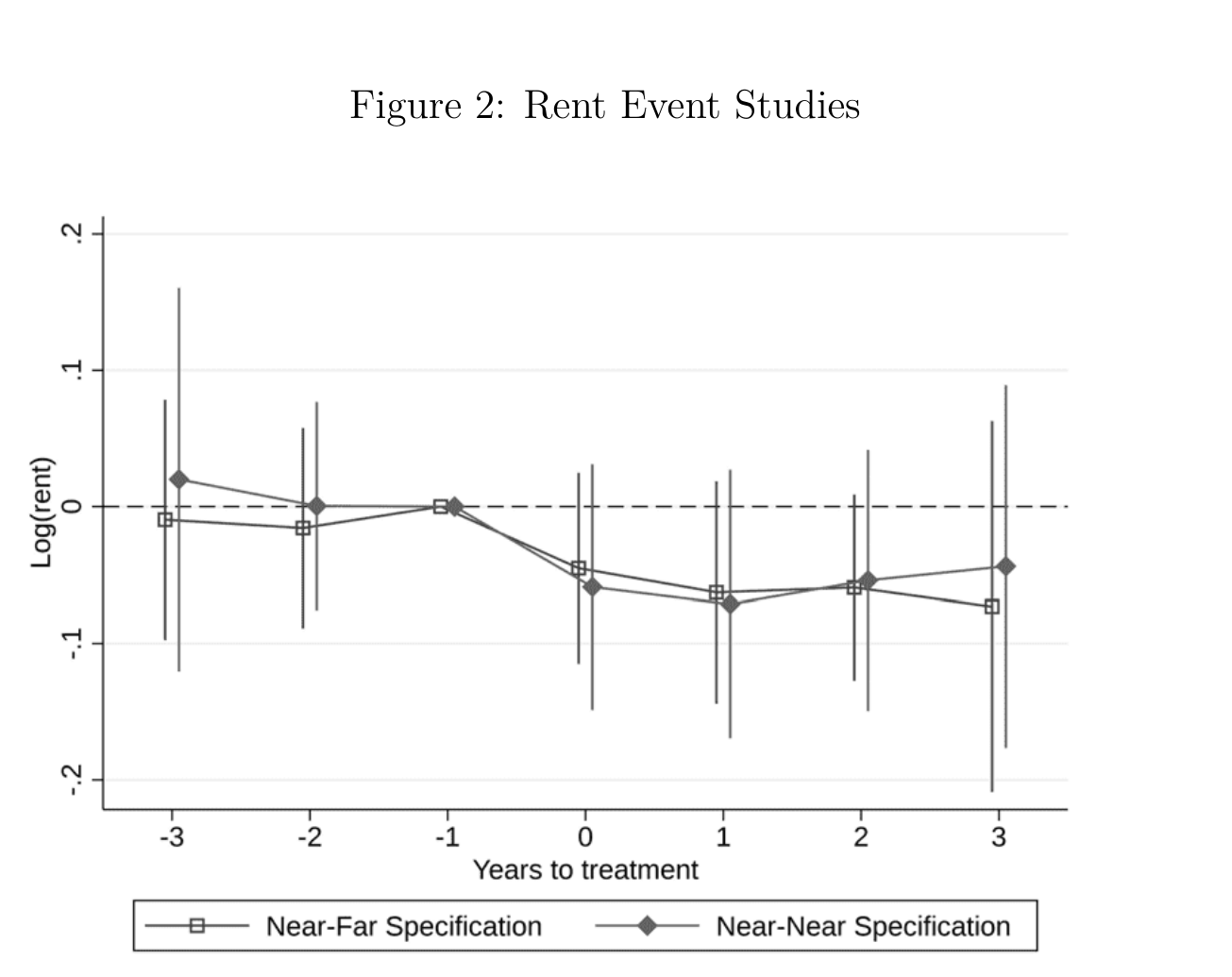
The actual and synthetic rent indexes track closely before 2016 and separate after the reform.
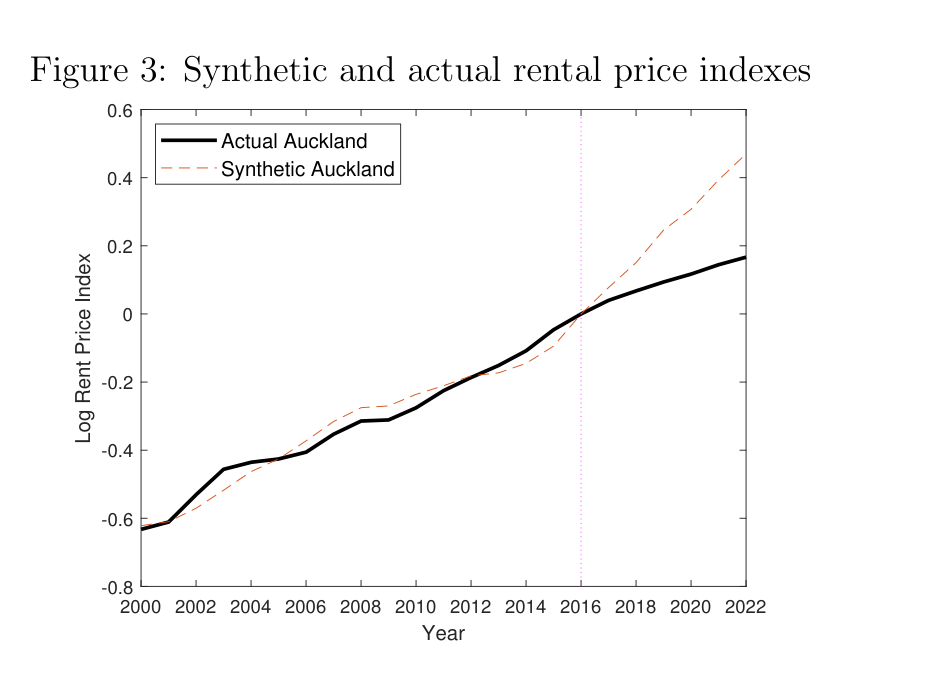
Both comparison strategies turn negative after treatment; the vertical bars show uncertainty.