Share scarce land
Two or four households can share land that zoning otherwise reserves for one.
Missing middle
Duplexes, fourplexes, cottages, courtyard apartments, and rowhouses once made ordinary neighborhoods work. Let them belong again.
Allow a house-sized building to contain more than one home, and restore familiar forms such as duplexes, courtyard apartments, and rowhouses.
How it works
Two or four households can share land that zoning otherwise reserves for one.
Smaller projects can be undertaken by local builders and homeowners.
Neighborhoods can add homes one lot at a time instead of relying only on megaprojects.
The implementation test
Missing-middle reform is not a mandate for every block to become high-rise. Most projects remain small and appear gradually as owners choose to build.
StrongDuplexes through fourplexes and townhomes are clearly legal.
Weak or symbolicOnly one narrow prototype technically qualifies.
StrongUnit count fits within a practical building envelope.
Weak or symbolicPer-unit lot area or setbacks make added homes impossible.
StrongFees and utility rules reflect the project's small scale.
Weak or symbolicEach unit pays charges designed for a new detached house.
In practice
Portland legalized duplexes, triplexes, fourplexes, and other middle-housing options, then expanded the package in a second implementation step.
Real reform often arrives in stages. Portland first opened the door, then widened it.
Raleigh followed its ADU reform with missing-middle legalization, citywide parking reform, and a second middle-housing and transit-oriented package.
A city does not have to solve everything in one vote. Raleigh kept removing barriers as it learned what still stood in the way.
Why support it?
When more households want in than there are homes available, the highest bidders win. Everyone else pays more, accepts less, moves farther away, doubles up, or leaves.
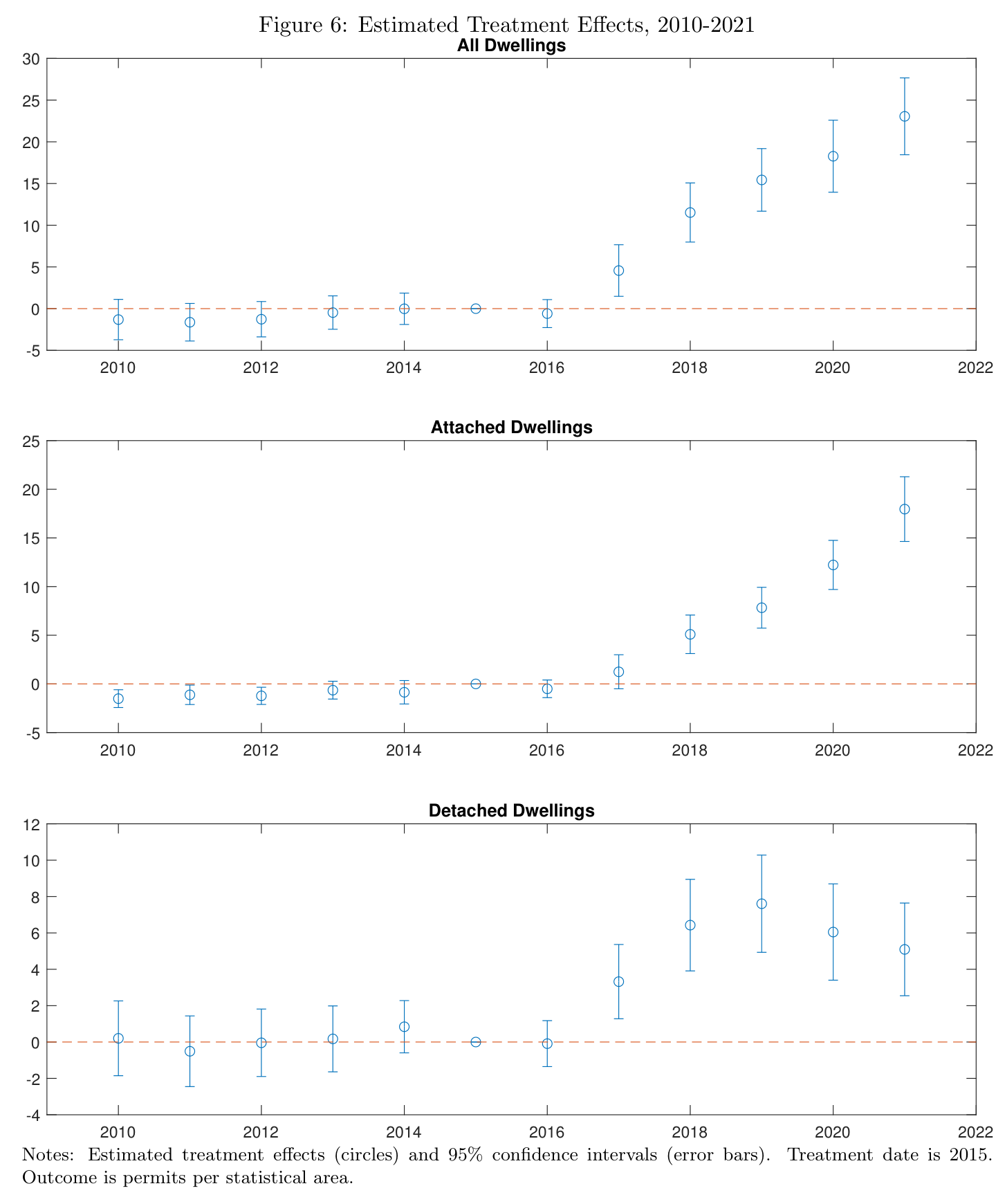
Legalize real projects across enough land and builders respond. Auckland did this at city scale and saw a large permitting boom; narrower reforms have usually delivered less.
A reform can promise density and still bury it under tiny maps, parking ratios, setbacks, fees, hearings, and delay. Good reform makes ordinary projects legal, feasible, and predictable.
The strongest post-reform increases appear after roughly five years, especially for large upzonings.
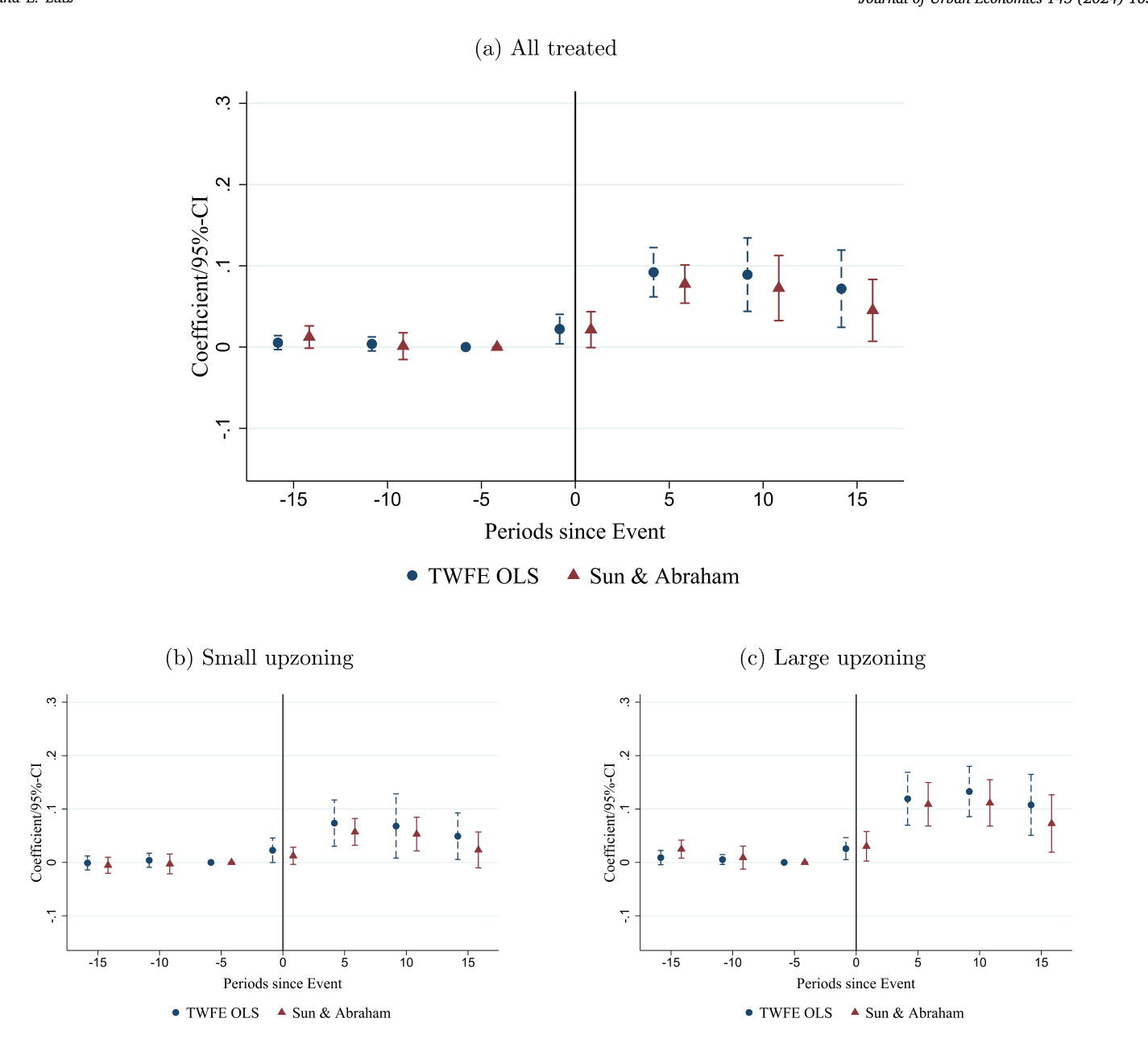
The estimated effects become positive after the reform for both attached and detached homes.