The starting point
Established evidenceScarcity turns neighbors into bidders.
When more households want in than there are homes available, the highest bidders win. Everyone else pays more, accepts less, moves farther away, doubles up, or leaves.
Figures from the papers
Inspect the published evidence directly
Figure 2 · Average number of addresses before and after reform
The two groups track similarly before reform and separate gradually afterward.
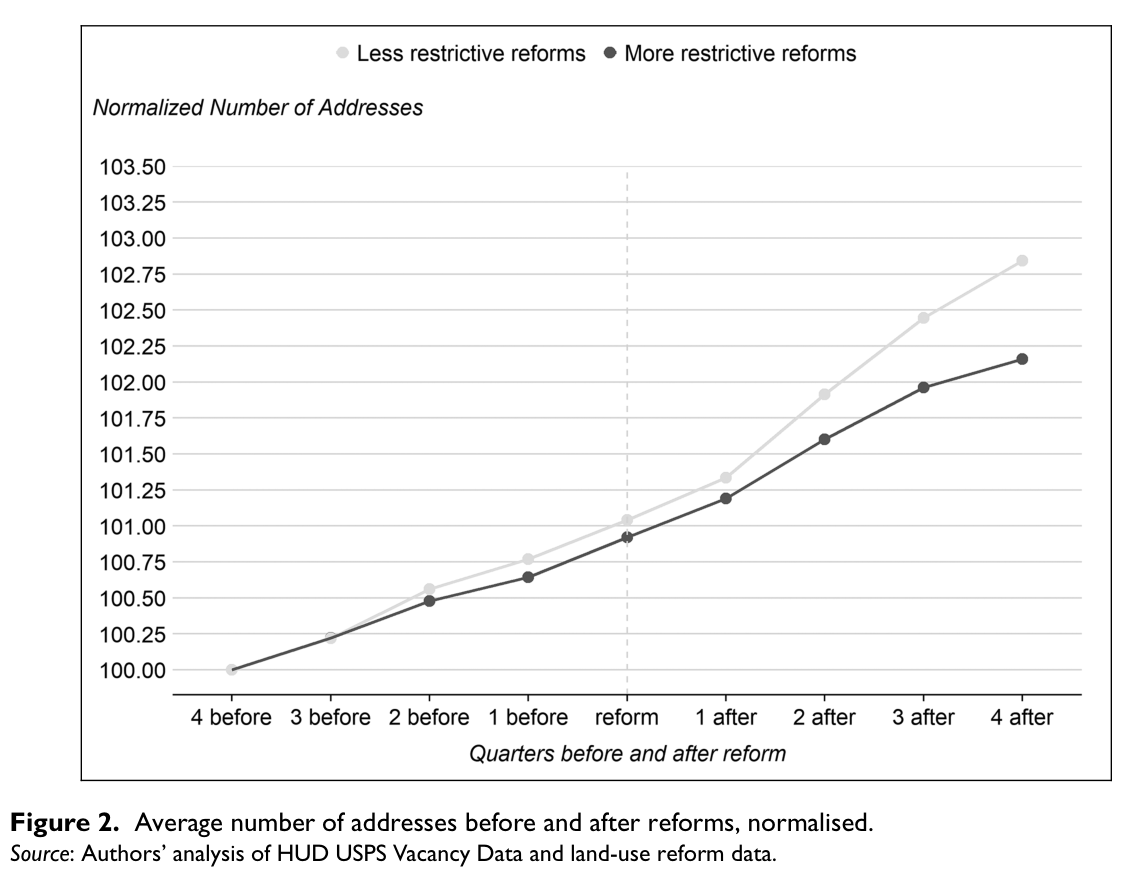
Figure 3 · Modeled house prices after removing supply constraints
The modeled price path is lower when regulatory and physical constraints are removed.
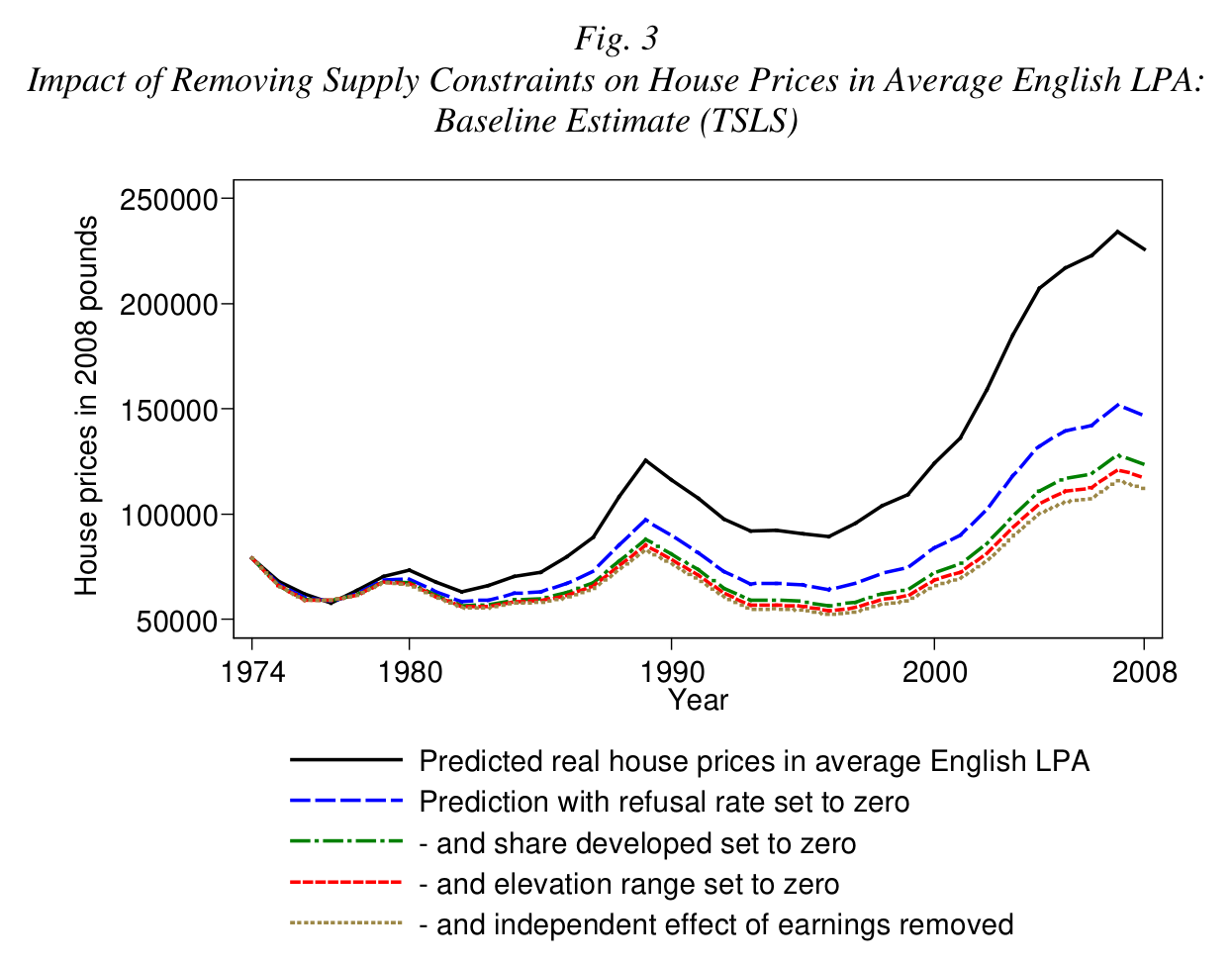
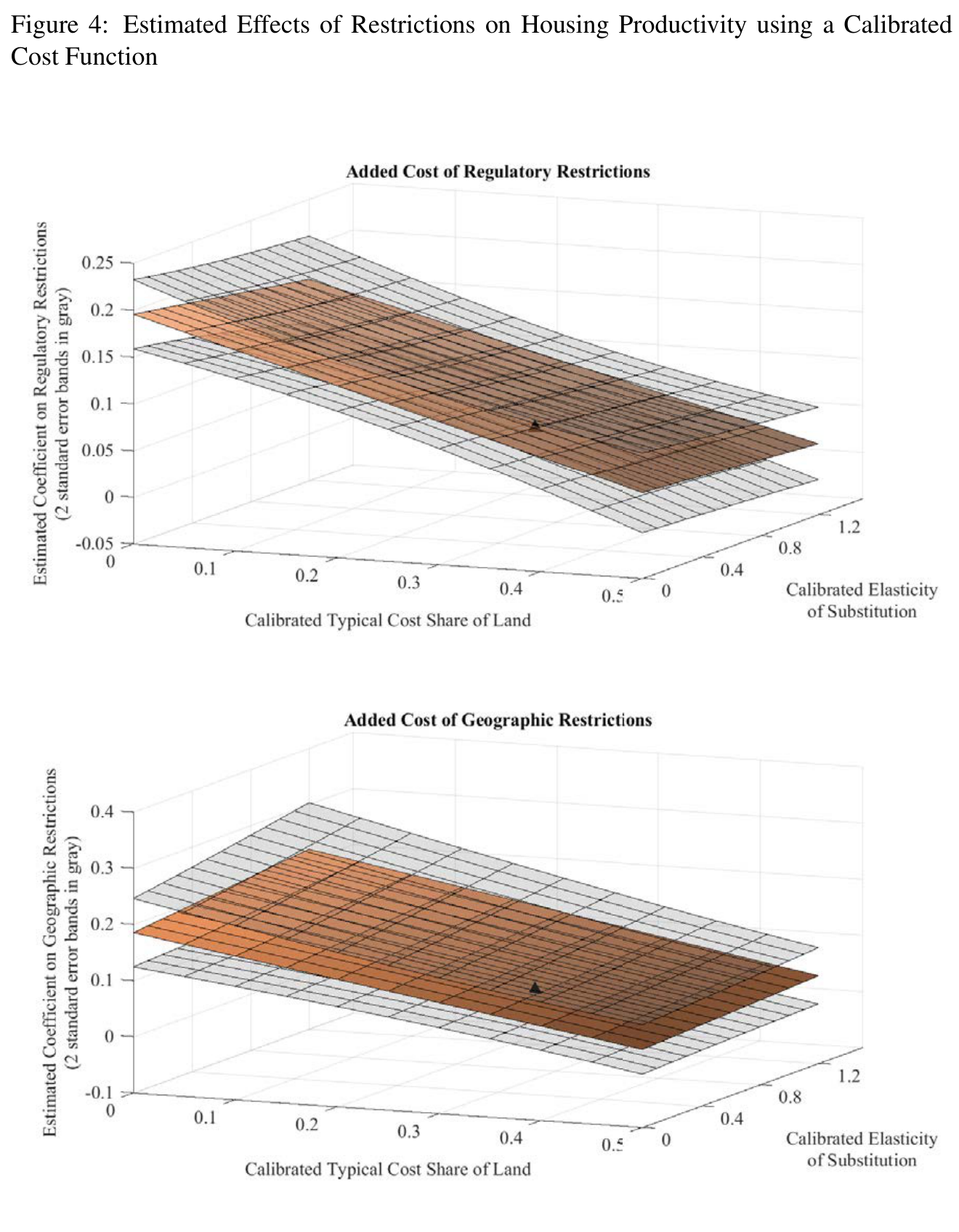
Figure 4 · Estimated effects of restrictions on housing productivity
Across calibrated assumptions, the model attributes a positive cost wedge to regulatory restrictions.
Evidence stack
Studies behind this conclusion
The Impact of Building Restrictions on Housing Affordability
In expensive markets, home prices often exceed construction costs by far more than ordinary land costs can explain, implicating limits on building.
Keep in mind: This is an indirect, cross-sectional test rather than an evaluation of one reform.
Study details →The Impact of Supply Constraints on House Prices in England
Housing prices responded more strongly to demand in places with tighter regulatory and physical supply constraints.
Their counterfactual model estimates 16.3% lower prices in an average travel-to-work area without regulatory constraints
Keep in mind: The 16.3% figure is a modeled counterfactual, not the observed effect of one reform, and the setting is England.
Study details →Housing Productivity and the Social Cost of Land-Use Restrictions
The authors estimate that land-use restrictions make housing substantially more expensive and impose net social costs in high-demand metropolitan areas.
Modeled restrictions raise housing costs about 15 percentage points and reduce welfare by 2.3% of income
Keep in mind: These are structural-model estimates that depend on assumptions about land, construction, amenities, and household location choices.
Study details →Land-Use Reforms and Housing Costs
Loosening reforms were followed by modest average supply gains, while tightening reforms reduced middle-income-affordable units and raised rents.
Loosening was associated with 0.8% more housing after 3–9 years
Keep in mind: Reforms are heterogeneous and the cross-city design remains observational.
Study details →From evidence to policy