Expand access
More households can reach jobs and services without needing a long car commute.
Homes near transit
A train station surrounded by housing bans is a public investment surrounded by a private waiting list. Let more people live within reach.
Let more people live within an easy walk of frequent transit and major job centers, where access is valuable and car ownership can be optional.
How it works
More households can reach jobs and services without needing a long car commute.
Ridership and tax base grow around infrastructure communities already paid for.
Housing and transportation are household budget partners; location affects both.
The implementation test
Transit-oriented housing is not just towers at rail stations. It can include apartments, townhomes, and mixed-use streets along reliable bus corridors too.
StrongBoundaries reflect a safe walk and actual service quality.
Weak or symbolicA circle ignores highways, hills, or infrequent service.
StrongThe strongest transit receives meaningful housing capacity.
Weak or symbolicA shallow overlay adds little beyond existing zoning.
StrongExisting affordable homes and vulnerable tenants receive protection.
Weak or symbolicCapacity is added without tracking displacement risks.
In practice
Raleigh combined additional citywide middle-housing changes with a geographically targeted development option around mapped frequent transit.
A transit map should be a welcome mat, not a moat. The strongest service should connect more people to more homes.
Why support it?
When more households want in than there are homes available, the highest bidders win. Everyone else pays more, accepts less, moves farther away, doubles up, or leaves.
Legalize real projects across enough land and builders respond. Auckland did this at city scale and saw a large permitting boom; narrower reforms have usually delivered less.
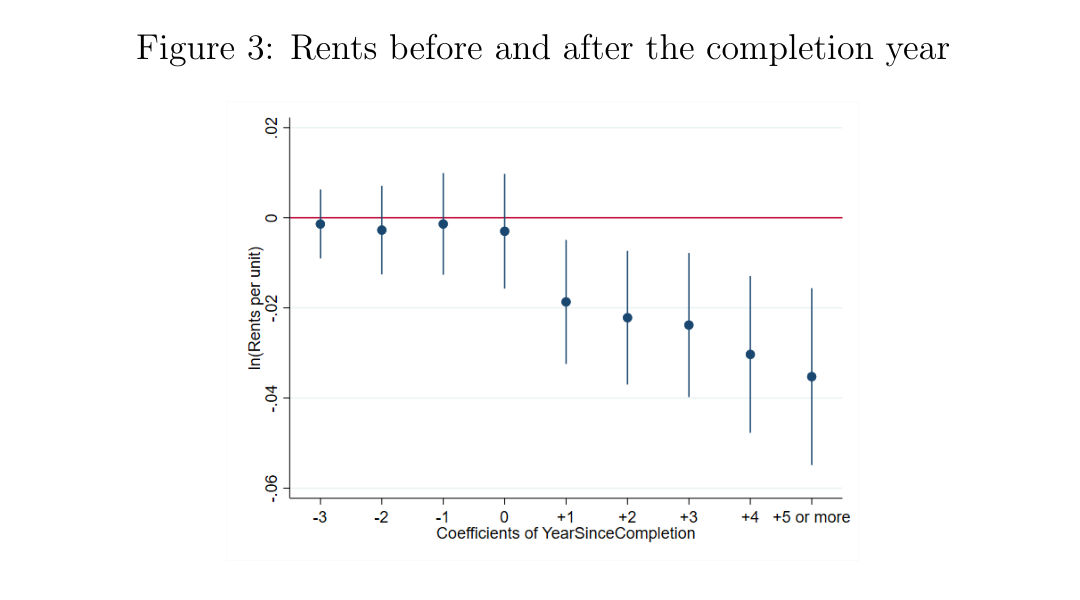
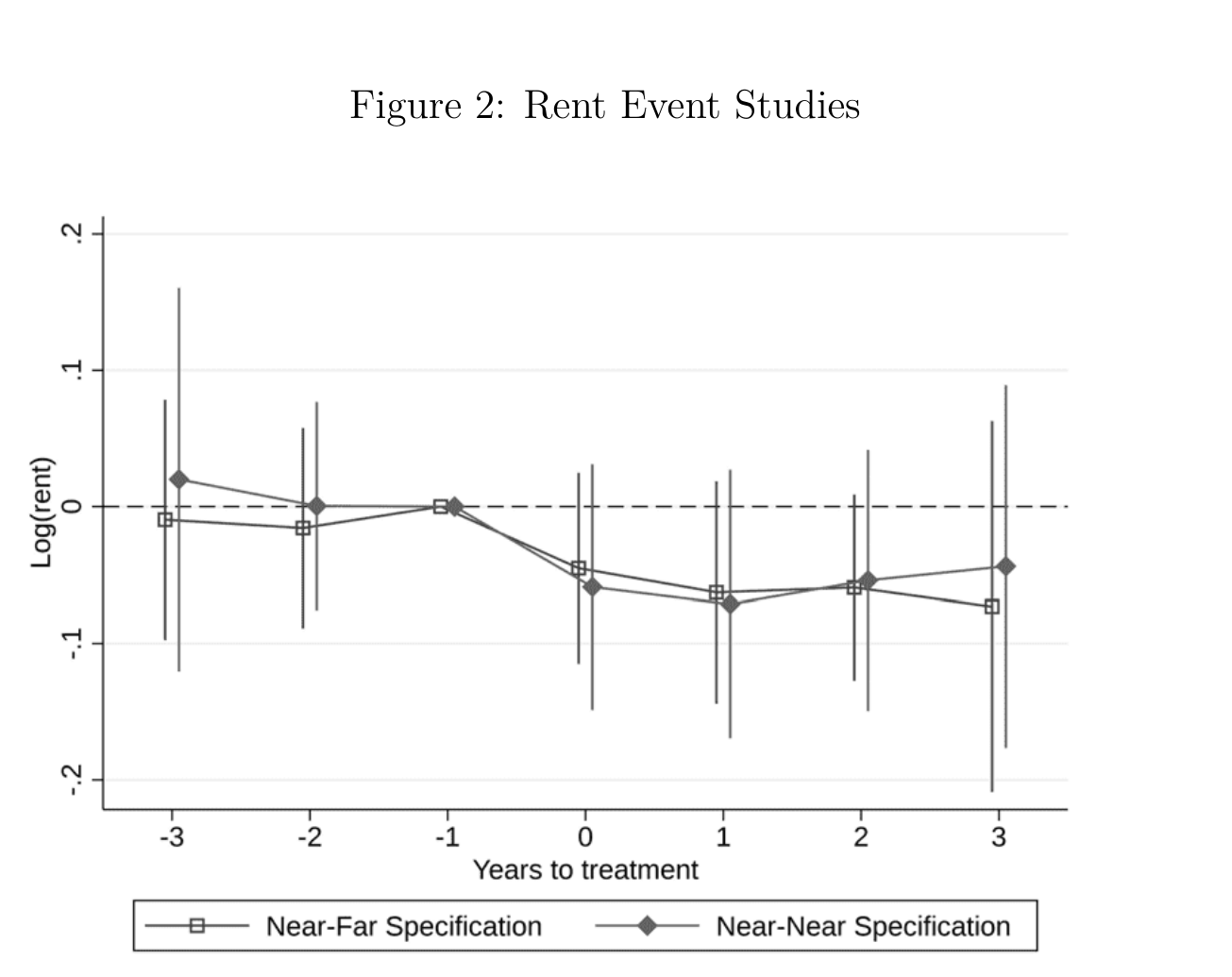
When newcomers cannot rent new homes, they bid for existing ones. Project-level studies generally find that nearby construction reduces rent and displacement pressure rather than increasing it.
Both comparison strategies turn negative after treatment; the vertical bars show uncertainty.
The completion event study shows little pre-trend and a growing negative rent effect afterward.