Peer reviewed2018United States

Housing Productivity and the Social Cost of Land-Use Restrictions

Albouy & Ehrlich

Main finding

The authors estimate that land-use restrictions make housing substantially more expensive and impose net social costs in high-demand metropolitan areas.

Modeled restrictions raise housing costs about 15 percentage points and reduce welfare by 2.3% of income
Most important limitation

These are structural-model estimates that depend on assumptions about land, construction, amenities, and household location choices.

From the publication

Inspect the authors' figure directly

Figure from the paper

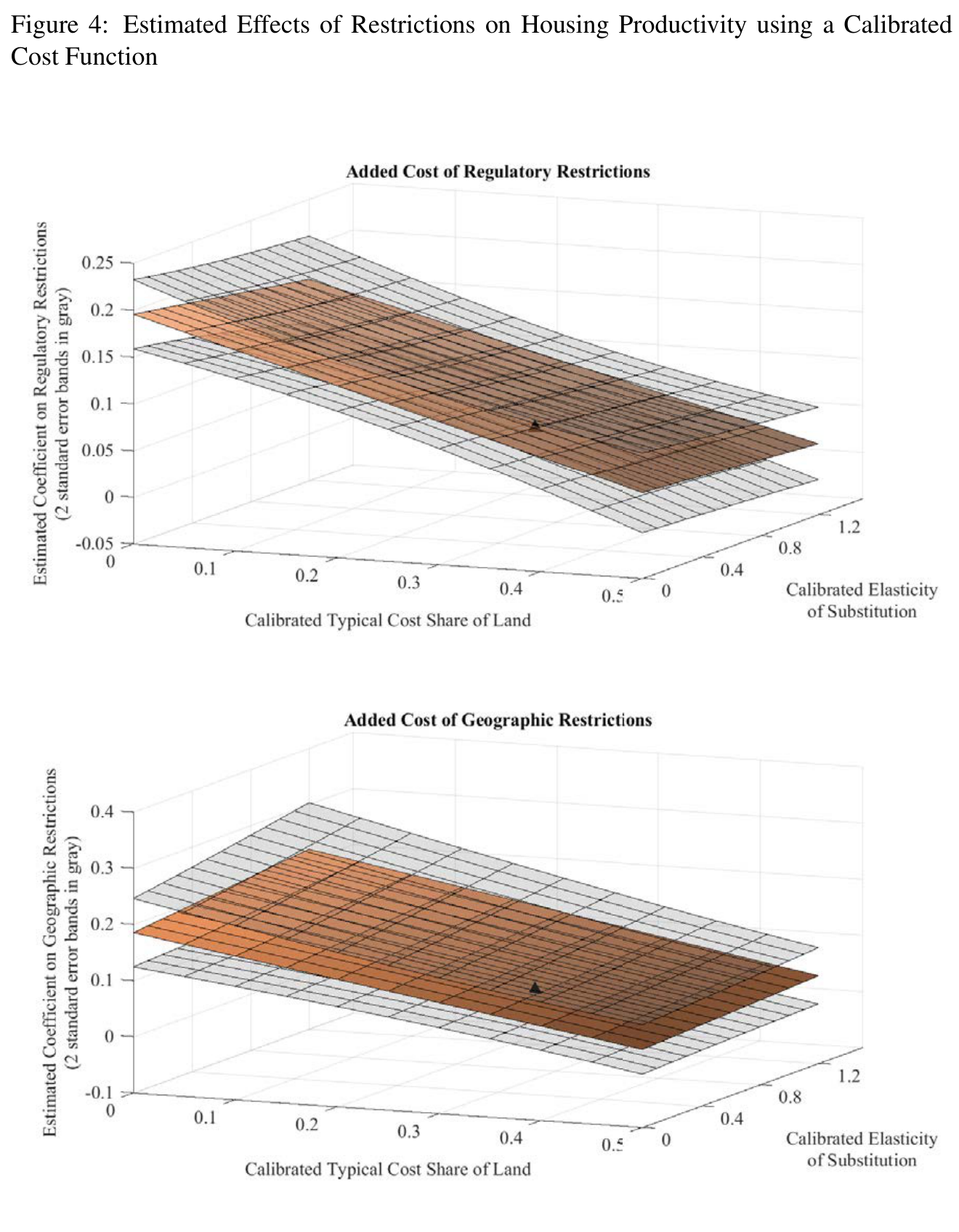
Figure 4 · Estimated effects of restrictions on housing productivity

Across calibrated assumptions, the model attributes a positive cost wedge to regulatory restrictions.

Published two-panel response surfaces showing estimated added housing costs from regulatory and geographic restrictions under alternative calibrated assumptions.

Source: Albouy & Ehrlich (2018), Figure 4; PDF p. 44.

Read carefully: The magnitude comes from a structural model and depends on assumptions about costs, substitution, amenities, and location choices.

How this study is used

Claims this evidence supports

Established evidenceScarcity turns neighbors into bidders.See the full evidence stack →

Reference

Albouy & Ehrlich (2018). “Housing Productivity and the Social Cost of Land-Use Restrictions.”

Open publisher or paper (opens in a new tab)