Main finding
Moves into new market-rate buildings open older homes throughout the market, and those chains reach lower-income neighborhoods within a few years.
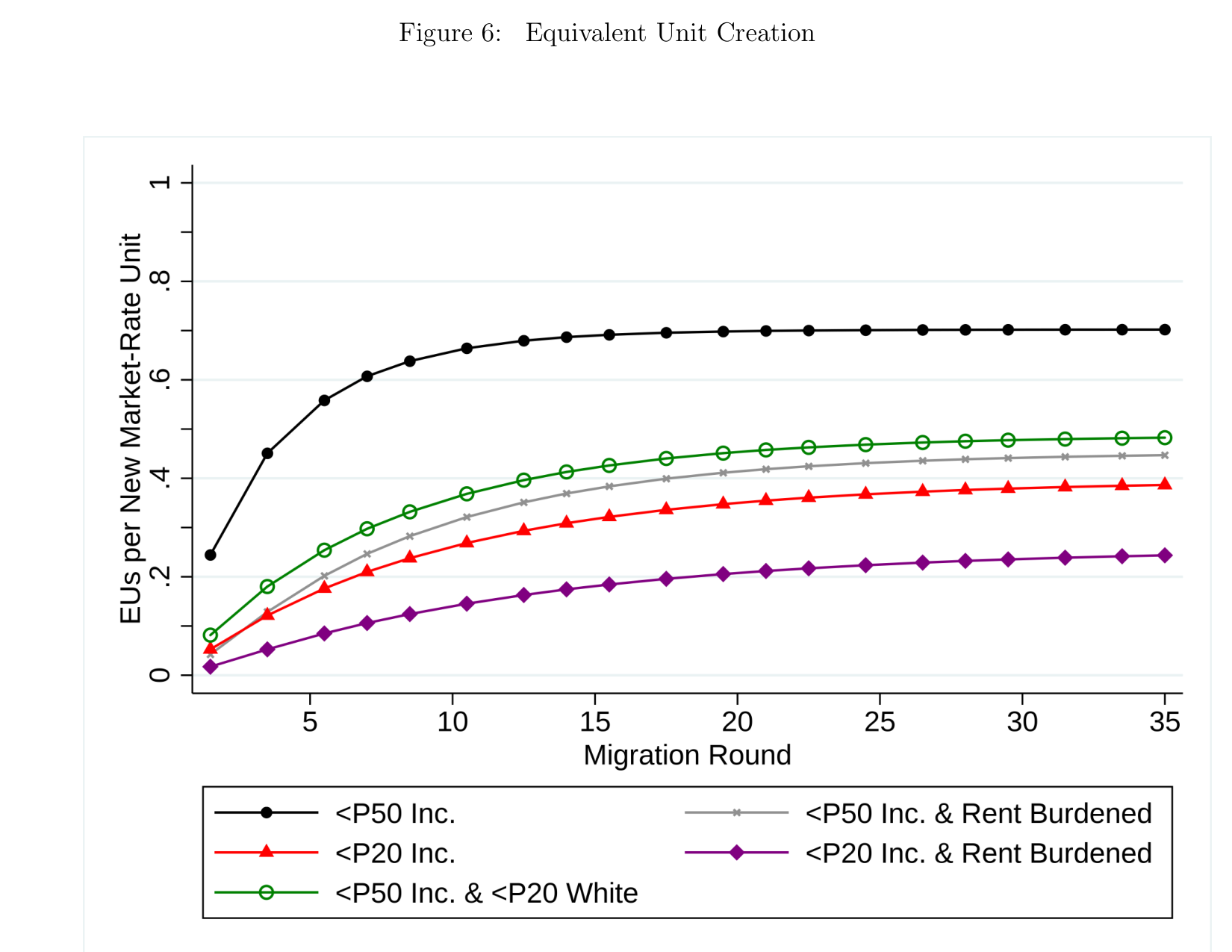
100 new homes led 45–70 people to leave below-median-income tracts within five years
Mast
Main finding
100 new homes led 45–70 people to leave below-median-income tracts within five years
Most important limitation
The chain endpoint is modeled and counts people rather than housing units.
From the publication
As moves propagate, the model reaches more below-median-income and rent-burdened neighborhoods.
How this study is used
Reference
Mast (2023). “The Effect of New Market-Rate Housing Construction on the Low-Income Housing Market.”